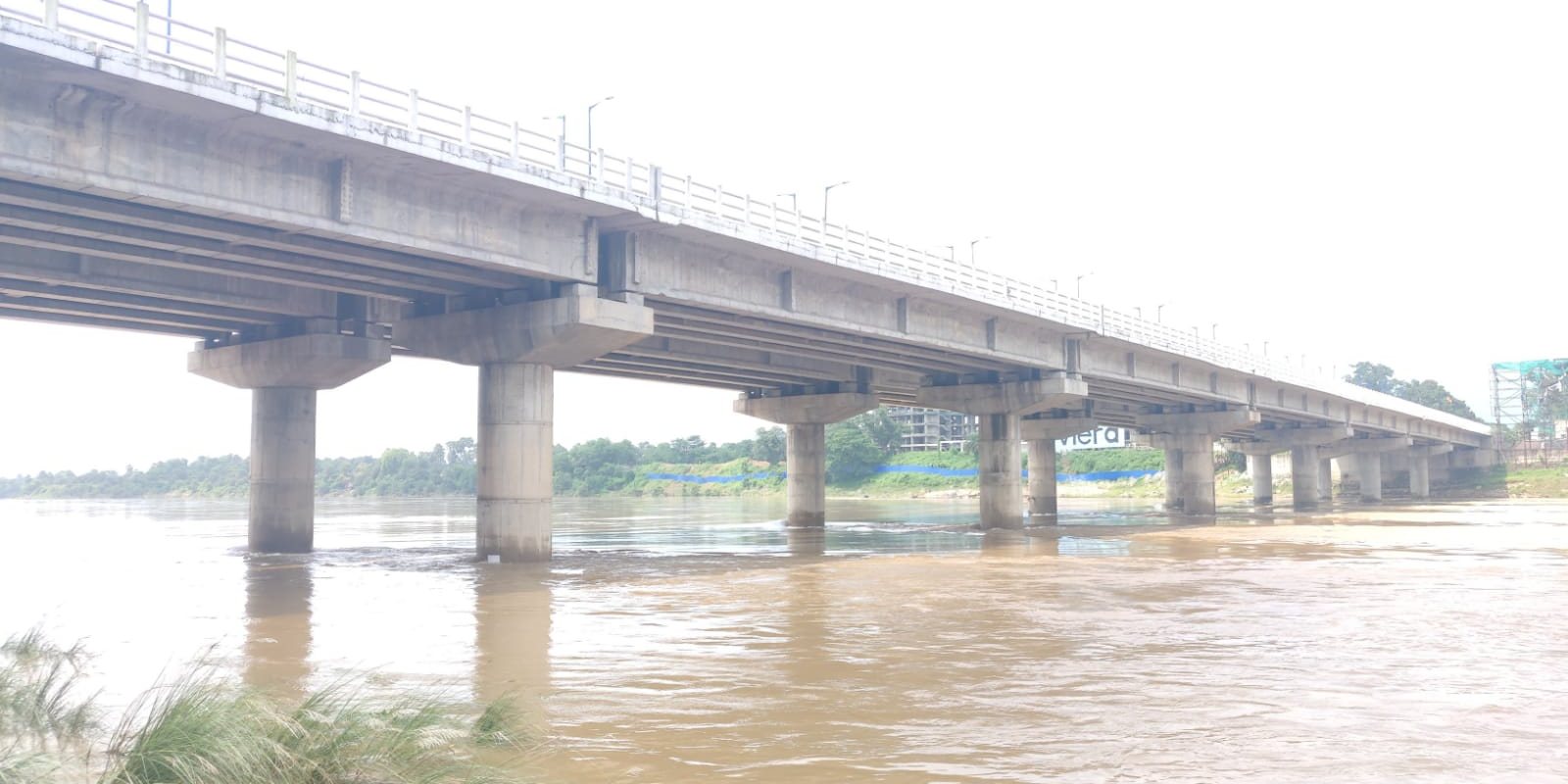
A hydrology report for a culvert on a village road and a hydrology report for a major bridge across the Brahmaputra draw on the same family of codes — IRC:SP:13, IRC:89, IRC:78, IS 10751 — but at very different levels of rigour. One is a desk calculation finished in an afternoon. The other can involve years of gauge-data analysis and physical model testing at a national research laboratory.
This guide consolidates, in one place, the IRC and IS codes that govern hydrology and hydraulics for cross-drainage structures and bridges, the nature of the published research literature, and the studies actually carried out at each level — so you can locate the right reference for the structure in hand without working through three shelves of codes first.
Key takeaways
- IRC:SP:13-2022 is the core reference for hydrology and waterway sizing up to roughly 30 m span; IRC:89-2019 governs afflux, guide bunds and river training for major crossings.
- IRC:78 governs scour-depth estimation and its use in fixing foundation levels; IRC:SP:54-2018 and IRC:SP:19-2001 define what the hydrology chapter of a DPR must contain.
- IS codes (IS 10751, IS 7784, IS 14955, IS 4410) come mainly from irrigation and river-training practice and are used alongside, not instead of, the IRC provisions.
- Study scope scales in three tiers: desk calculation for culverts, survey plus flood-frequency analysis for small bridges, and gauge-data, morphological and physical or numerical model studies for major river crossings.
- Physical model studies reduce uncertainty but do not eliminate it — the NH-57 Kosi bridge experience of 2010 is the standing reminder.
What this guide covers
1. Why a consolidated list matters
The codes for bridge hydrology are spread across two standards bodies and at least eight documents, several of which were written for a different discipline entirely. IS 7784, for instance, was drafted for canal cross-drainage works under irrigation practice, not for highway bridges. An engineer looking for "the code for afflux" will not find a single answer, because afflux computation sits in IRC:89 while the waterway it applies to is sized under IRC:SP:13 and the foundation it affects is fixed under IRC:78.
The list below is arranged the way the work actually proceeds: what governs the design, what supplements it, what the literature adds, and how much of any of it a given structure needs.
2. Consolidated list of IRC codes for hydrology and hydraulics
| Code | Title | Relevance |
|---|---|---|
| IRC:5-2015 | Road Bridges, Section I – General Features of Design (Eighth Revision) | Classifies structures by span (culvert / minor / major / important bridge); sets vertical clearance, freeboard and general waterway requirements |
| IRC:6-2017 | Road Bridges, Section II – Loads and Load Combinations | Water-current and hydrodynamic force on piers, buoyancy and wave pressure, needed alongside the hydraulic design |
| IRC:SP:13-2022 | Guidelines for the Design of Small Bridges and Culverts (Second Revision) | Core reference for hydrological methods, waterway sizing and hydraulic design up to about 30 m span |
| IRC:SP:19-2001 | Manual for Survey, Investigation and Preparation of Road Projects (First Revision) | Prescribes the survey and data-collection stages, including the hydrological survey, before any hydrology report |
| IRC:SP:54-2018 | Project Preparation Manual for Bridges (First Revision) | Checklist of what a bridge DPR — including its hydrology and hydraulics chapter — must contain |
| IRC:78 | Road Bridges, Section VII – Foundations and Substructure | Scour-depth estimation and its use in fixing foundation levels |
| IRC:SP:82-2008 | Guidelines for Design of Causeways and Submersible Bridges | Dedicated chapters on hydrology and hydraulics, waterway and afflux, and scour and foundations for low-level crossings |
| IRC:89-2019 | Guidelines for Design and Construction of River Training and Control Works for Road Bridges (Second Revision) | Afflux computation, guide bunds, spurs, floor and apron protection — essential for major river crossings |
Source: IRC publication records as listed in each row, cross-checked against the current IRC catalogue.
3. Consolidated list of IS (Bureau of Indian Standards) codes
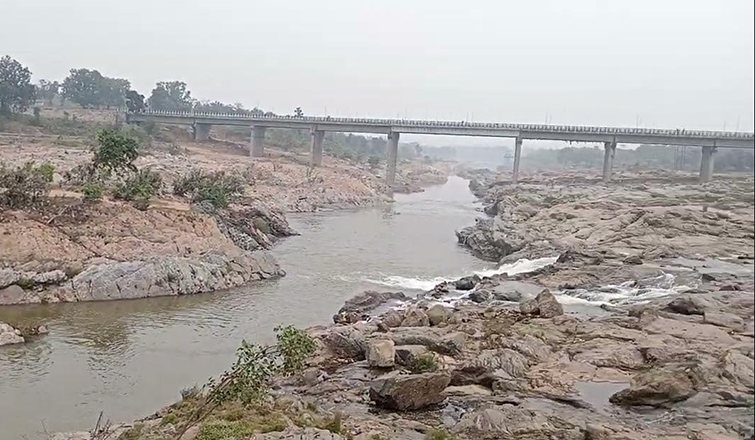
| IS code | Title | Relevance |
|---|---|---|
| IS 10751:2022 | Planning and Design of Guide Banks for Alluvial Rivers – Guidelines (First Revision) | Guide bank geometry, top width, freeboard, side slope and pitching — used with IRC:89 for major river crossings |
| IS 7784 (Part 1):2013 | Design of Cross Drainage Works – Code of Practice: Part 1 General Features (Second Revision) | General hydraulic principles for cross-drainage works, originally for canal crossings but widely used |
| IS 7784 (Part 2/Sec 4):1999 | Design of Cross Drainage Works – Code of Practice, Section 4 Level Crossings | Directly relevant where a road or canal crosses a drain at grade |
| IS 6966 (Part 1):1989 | Hydraulic Design of Barrages and Weirs – Guidelines: Part 1 Alluvial Reaches | Hydraulic behaviour of alluvial reaches, relevant near a barrage or weir |
| IS 7720:1991 | Criteria for Investigation, Planning and Layout for Barrages and Weirs (First Revision) | Relevant where a major bridge site interacts with a barrage or weir |
| IS 14955:2001 | Guidelines for Hydraulic Model Studies of Barrages and Weirs | Governs physical model-study methodology, adapted for major bridge waterway studies |
| IS 4410 (various parts) | Glossary of Terms Relating to River Valley Projects | Standard terminology — afflux, regime width, design discharge — used across hydrology reports |
| IS 2911 (relevant parts) | Design and Construction of Pile Foundations – Code of Practice | Used once the scour study indicates deep foundations are required |
Source: Bureau of Indian Standards, Water Resources Department (WRD 13 – Canals and Cross Drainage Works; WRD 22 – River Training), cross-checked against the BIS "Know Your Standards" database.
A practical note on IS 7784. It and its sections were drafted for canal cross-drainage works — aqueducts, syphons, level crossings — under irrigation practice, not specifically for highway bridges. Bridge engineers use it mainly for the terminology and general hydraulic principles it shares with IRC:SP:13 and IRC:89, and directly when a road crosses an irrigation channel rather than a natural stream. Quoting it as the design basis for a natural-stream crossing invites a query from the checking authority.
4. Research papers and technical literature in IRC journals
The Indian Roads Congress publishes two recurring technical platforms carrying peer-reviewed and practice papers on bridge hydrology and hydraulics:
- Journal of the Indian Roads Congress (JIRC) — the Congress's principal technical journal (ISSN 0258-0500), carrying longer research papers, often with experimental or field data.
- Indian Highways — IRC's monthly technical magazine, carrying shorter technical notes, case studies and practice-oriented articles.
One directly relevant, verifiable example:
Rao, M.V.J. and Mallikarjuna, P., "A Rational Approach for Estimating Afflux at Bridge Constrictions," Journal of the Indian Roads Congress, Vol. 59, Issue 2, October 1998, pp. 285–298. The paper derives rational afflux–discharge relations for choked and unchoked flow at bridge constrictions from a mathematical model, with drag and pier-nose resistance coefficients evaluated from physical model experiments on different pier shapes — directly relevant to the afflux computation required under IRC:89. (Source: JIRC Vol. 59-2, 1998, as catalogued by the TRID database.)
Beyond that specific example, the recurring themes across JIRC and Indian Highways issues on this subject include:
- Refinements to Lacey's regime theory and its applicability limits for Indian alluvial rivers.
- Comparative studies of empirical design-discharge formulae — Dicken's, Ryve's, Inglis — against gauged catchment data for different regions of India.
- Case studies of afflux and scour behaviour at specific major bridges, often written up after a flood event exposed a gap between design assumption and observed performance.
- Papers on guide bund and spur performance, frequently authored by, or in collaboration with, the Central Water and Power Research Station (CWPRS), Pune.
A note on completeness
JIRC and Indian Highways have been published for close to a century, and a genuinely exhaustive bibliography on this subject cannot be reliably reconstructed from general knowledge or a handful of web searches — attempting it risks inventing titles that were never published. For a literature search on a specific structure or river, the reliable path is:
- Search the IRC's own digital library and e-IRC portal, and the Annual Session proceedings, which index papers by keyword and year.
- Search TRID (trid.trb.org), which catalogues JIRC papers with full bibliographic metadata.
- Consult CWPRS's Technical Reports and Technical Memoranda series (cwprs.gov.in) for any major river crossing where CWPRS has historically been involved.
Get a technical opinion on your project
Design, DPR, proof checking and independent review for highway and bridge projects across India.
5. Studies carried out for hydrology report preparation — by class of structure
"The hydrology report" is not the same document for a 1.2 m pipe culvert and a 1,000 m bridge across a Himalayan river. Practice in India — consistent with the classification in IRC:5 and the survey stages in IRC:SP:19 — scales the effort in three broad tiers.
5.1 Cross-drainage structures and culverts (small catchments)
Typical studies carried out:
- Toposheet-based catchment delineation (1:50,000 Survey of India sheets or better).
- Design discharge by the Rational Method, cross-checked against an empirical regional formula (Dicken's, Ryve's or Inglis, chosen by region).
- Local enquiry and flood-mark survey to establish HFL where no gauge data exists.
- Waterway sizing by Lacey's regime formula and hydraulic (orifice, weir or Manning) calculation.
- Basic scour estimate by Lacey's method for foundation depth.
Source: IRC:SP:13-2022, hydrology and hydraulic design chapters, read with IRC:SP:19-2001 for the survey stage.
This tier is almost entirely a desk-and-short-field-visit exercise. No gauge data or model study is typically involved. Our free hydrology calculator and hydro-scour calculator cover exactly this band of work, and the resulting parameters should be carried straight into the structure's inventory record so they need not be re-derived at the next review.
5.2 Small bridges across streams (medium catchments)
Typical studies carried out, in addition to the above:
- Detailed topographic and cross-sectional survey of the stream at and around the proposed site (per IRC:SP:19).
- Flood-frequency analysis where any gauge or observed discharge record exists for the stream or a comparable neighbouring catchment.
- Afflux computation per the standard formula in IRC:89 Appendix 1(a), and a check that the afflux does not endanger upstream property.
- Scour assessment refined for pier and abutment location and for bends, per IRC:78 read with IRC:SP:13.
- Preliminary check on whether bank or approach protection — short guide bunds, revetment — is warranted, per IRC:89.
Source: IRC:SP:13-2022; IRC:89-2019, Appendix 1(a); IRC:78, Section VII – Foundations and Substructure.
5.3 Major bridges across major rivers
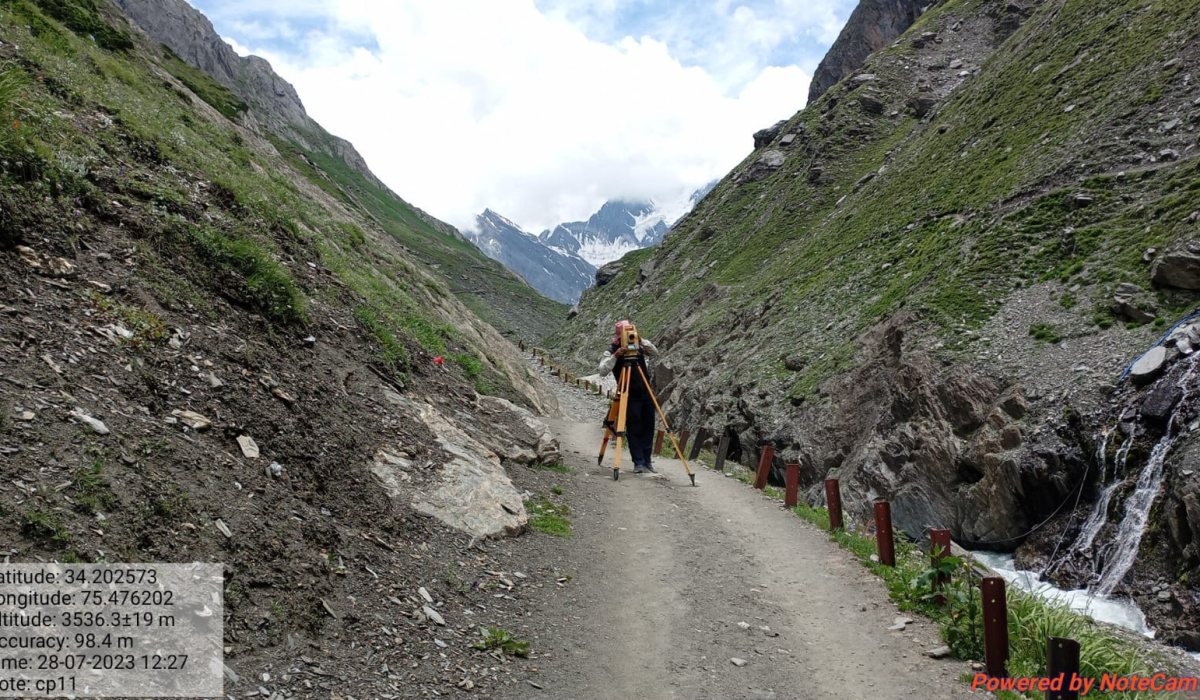
Typical studies carried out, in addition to all of the above:
- Long-term gauge-data analysis and flood-frequency study, using discharge records from the State irrigation or flood-control department or Central Water Commission (CWC) gauges, rather than relying solely on empirical formulae.
- Morphological study of the river reach — historical course changes from satellite imagery and toposheets over decades, to assess whether the river is meandering, braided, aggrading or degrading at the proposed site.
- Detailed afflux and backwater computation, checked against the alternative method in IRC:89 Appendix 1(b) for discharges above about 3,000 m³/s.
- Physical (hydraulic) model studies, typically carried out by CWPRS, Pune — India's apex hydraulic-research institution, whose stated service areas explicitly include hydraulic design of bridges alongside river training and flood control.
- Mathematical and numerical model studies of the river reach, now a standard companion to physical model studies and an added formal chapter in the second revision of IRC:89-2019.
- Guide bund and spur design per IRC:89 and IS 10751:2022, validated against the model-study results rather than by formula alone.
- Detailed scour study informing pile or well foundation design, often supplemented by sub-soil exploration at each pier and abutment location.
Source: IRC:89-2019, Sections 11 (Physical Model Studies) and 12 (Mathematical Modeling); IS 10751:2022; IS 14955:2001; CWPRS, "About Us," cwprs.gov.in.
A cautionary case study worth knowing
The NH-57 road bridge and the adjacent railway bridge across the Kosi river (Nirmali–Bhaptiyahi) had their site selection, waterway and guide bund and protection-embankment design based on physical model tests and computer model studies carried out by CWPRS, under a Technical Committee chaired by the Ministry's Director General (Road Development).
During the 2010 monsoon, at only about 20 per cent of the design discharge, the observed spread of backwater and the level of afflux far exceeded the model predictions, leading to breaches in the protection embankments and large-scale inundation upstream. (Source: M.B. Verma Committee Report on the NH-57 Road and Rail Bridge, as published via the India Water Portal.)
The episode is a standing reminder in Indian bridge-hydraulics practice that model studies reduce uncertainty but do not eliminate it — particularly on highly dynamic, sediment-laden Himalayan rivers — and that conservative afflux and waterway margins and robust protection-work detailing remain essential even after a model study has been carried out.
6. Typical contents of a hydrology report (all tiers, scaled by structure class)
Regardless of tier, a hydrology report submitted as part of a bridge DPR is generally expected to contain:
- Catchment description — area, shape, slope, land use — with a map.
- Design discharge estimation: the method or methods used, and the return period adopted.
- Design HFL, with its basis (gauge record, flood marks, or computed backwater).
- Linear waterway — required (regime) versus provided, with justification for any departure.
- Afflux computation and its assessed impact on upstream land and structures.
- Scour depth computation and the resulting founding levels.
- Where applicable, model-study findings and how they were incorporated into the design.
- Recommendations for guide bunds, spurs or bank protection, if required.
Source: IRC:SP:54-2018, Project Preparation Manual for Bridges, and IRC:SP:19-2001, Appendix-9, Check List of Items for a Highway Project Report — both specify hydrology and hydraulics as a mandatory DPR component.
7. Practical takeaways for the practising engineer
- Match the study to the structure class. A culvert does not need a CWPRS model study, and a major river crossing should not be designed from empirical formulae alone.
- Keep the codal trail visible in the report. Cite the specific IRC or IS clause behind every discharge, waterway, afflux and scour figure. It is what a checking engineer — or the next rehabilitation study, twenty years on — will look for first.
- Treat model-study results as a refinement, not a guarantee. The Kosi case above is the reason to retain conservative margins even where a model study has been carried out.
- Use the literature to sense-check formulae, not to replace codal provisions. A JIRC or Indian Highways paper on afflux or scour is valuable for understanding the basis and limitations of a formula, but the codal provision — IRC:SP:13, IRC:89, IRC:78 — remains the design basis for submission and approval.
For crossings where the hydrology drives the whole scheme, this work is handled end to end as part of our river bridge design and DPR preparation services, with proof checking available where a second opinion on the waterway or scour assumptions is wanted before submission. For the steel superstructure that sits on top of those foundations, the companion guide to IS 800:2007 versus IRC:24-2010 maps the member-design clauses the same way this article maps the hydrology ones.
8. Frequently asked questions
Which IRC code is used for bridge hydrology and hydraulics?
There is no single code. IRC:SP:13-2022 is the core reference for hydrological methods and waterway sizing up to about 30 m span; IRC:89-2019 governs afflux computation and river training works; IRC:78 governs scour depth and founding levels; IRC:5-2015 sets classification, clearance and freeboard; and IRC:SP:19-2001 and IRC:SP:54-2018 define the survey stage and DPR contents respectively.
What is the difference between IRC:SP:13 and IRC:89?
IRC:SP:13 is the design guideline for small bridges and culverts — catchment estimation, design discharge, waterway sizing and hydraulic design up to roughly 30 m span. IRC:89 covers river training and control works for road bridges: afflux computation, guide bunds, spurs, floor and apron protection. Small structures are largely governed by IRC:SP:13; major river crossings depend heavily on IRC:89.
Which IS codes apply to bridge hydraulics in India?
IS 10751:2022 (guide banks for alluvial rivers), IS 7784 Parts 1 and 2/Sec 4 (cross-drainage works), IS 6966 Part 1 (hydraulic design of barrages and weirs, alluvial reaches), IS 7720 (investigation and layout for barrages and weirs), IS 14955 (hydraulic model studies), IS 4410 (glossary of river valley terms) and IS 2911 (pile foundations, once scour dictates deep foundations).
When is a physical model study required for a bridge?
Physical model studies are typically commissioned for major bridges across major rivers — particularly alluvial or braided rivers with significant morphological activity, and where guide bunds or extensive protection works are proposed. They are carried out under IRC:89-2019 Section 11, usually by CWPRS, Pune, with the methodology guided by IS 14955:2001. Culverts and small bridges do not require them.
What must a bridge hydrology report contain?
Catchment description with map; design discharge with method and return period; design HFL with its basis; required versus provided linear waterway with justification for any departure; afflux computation and upstream impact; scour depth and resulting founding levels; model-study findings where applicable; and recommendations for guide bunds, spurs or bank protection. This follows IRC:SP:54-2018 and the checklist at IRC:SP:19-2001 Appendix-9.
How is design discharge estimated for a culvert in India?
For small catchments, the Rational Method is the usual primary method, cross-checked against a regional empirical formula — Dicken's, Ryve's or Inglis depending on the region — with HFL established from flood marks and local enquiry where no gauge record exists. The methods and their applicability limits are set out in IRC:SP:13-2022.
Where can I find IRC journal papers on bridge hydrology?
Search the IRC digital library and e-IRC portal, which index Journal of the Indian Roads Congress and Indian Highways papers by keyword and year, and TRID (trid.trb.org), which catalogues JIRC papers with full bibliographic metadata. For major river crossings, CWPRS's Technical Reports and Technical Memoranda series on cwprs.gov.in is often the more directly relevant source.
9. Consolidated reference list
- IRC:5-2015, Road Bridges, Section I – General Features of Design, Indian Roads Congress.
- IRC:6-2017, Road Bridges, Section II – Loads and Load Combinations, Indian Roads Congress.
- IRC:SP:13-2022, Guidelines for the Design of Small Bridges and Culverts, Indian Roads Congress.
- IRC:SP:19-2001, Manual for Survey, Investigation and Preparation of Road Projects, Indian Roads Congress.
- IRC:SP:54-2018, Project Preparation Manual for Bridges, Indian Roads Congress.
- IRC:78, Road Bridges, Section VII – Foundations and Substructure, Indian Roads Congress.
- IRC:SP:82-2008, Guidelines for Design of Causeways and Submersible Bridges, Indian Roads Congress.
- IRC:89-2019, Guidelines for Design and Construction of River Training and Control Works for Road Bridges, Indian Roads Congress.
- IS 10751:2022, Planning and Design of Guide Banks for Alluvial Rivers – Guidelines, Bureau of Indian Standards.
- IS 7784 (Part 1):2013 and IS 7784 (Part 2/Sec 4):1999, Design of Cross Drainage Works – Code of Practice, BIS.
- IS 6966 (Part 1):1989, Hydraulic Design of Barrages and Weirs – Guidelines: Part 1 Alluvial Reaches, BIS.
- IS 14955:2001, Guidelines for Hydraulic Model Studies of Barrages and Weirs, BIS.
- IS 4410 (relevant parts), Glossary of Terms Relating to River Valley Projects, BIS.
- Rao, M.V.J. and Mallikarjuna, P., "A Rational Approach for Estimating Afflux at Bridge Constrictions," Journal of the Indian Roads Congress, Vol. 59-2, October 1998, pp. 285–298.
- M.B. Verma Committee Report on the NH-57 Road and Rail Bridge over the Kosi River, as published via the India Water Portal.
- Central Water and Power Research Station (CWPRS), Pune — "About Us," cwprs.gov.in.
Disclaimer: This article summarises codal scope and reports one verified example of published research literature for illustration. It does not purport to be an exhaustive bibliography of IRC Journal or Indian Highways papers on this subject, since a reliable exhaustive list cannot be reconstructed without direct access to the IRC's own indexed archives. Readers preparing a formal literature review should search the IRC digital library and TRID directly, and should verify every codal clause number against the current edition held in their office before use in a submission.