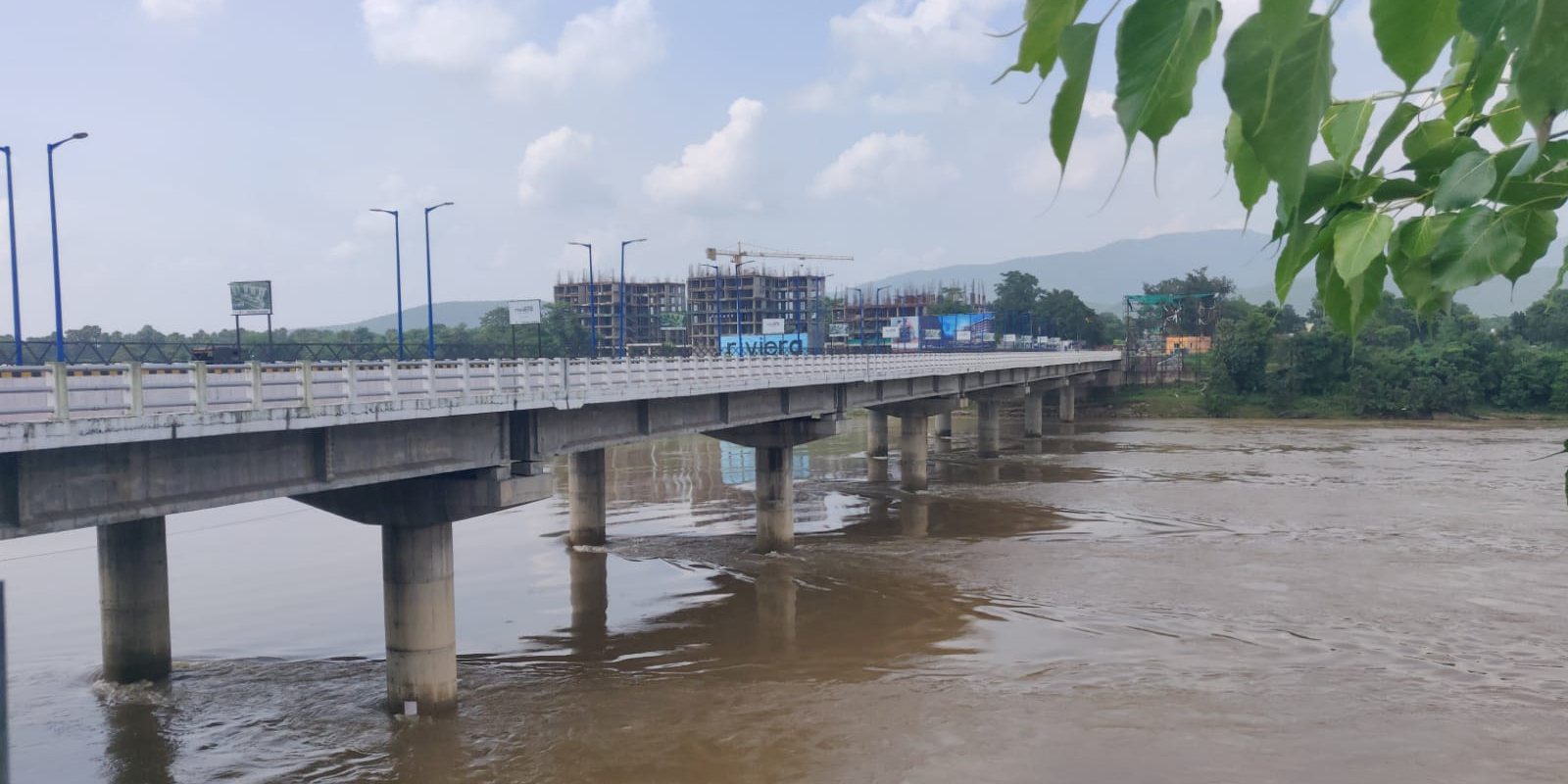
A bridge and cross-drainage (CD) structures inventory is the record of every bridge, culvert and flyover on a road network — where each one is, what it is made of, how it is performing, and how badly the network would hurt if it closed. In India, the reference format is the Indian Bridge Management System (IBMS), launched by the Ministry of Road Transport & Highways (MoRTH) in October 2016, which assigns every structure a unique 20-character National Identity Number along with rating numbers derived from its location, engineering characteristics, condition and socio-economic importance.
For a practising bridge design engineer this is not a filing exercise. It is the document you open before anything else — before a rehabilitation DPR, before a load-rating study under IRC:SP:37, before deciding whether an existing culvert's waterway is still adequate. This guide sets out why the inventory matters, when it must be created or updated, exactly what data goes into it, the numbering convention now in national use, and the step-by-step procedure followed in the field.
Key takeaways
- MoRTH launched IBMS in October 2016 after a series of bridge failures exposed the absence of any national bridge database.
- By July 2017, inventory and condition survey had been completed for 1,62,022 structures, including 1,26,233 culverts, on National Highways alone.
- Every structure gets a unique 20-character alphanumeric National Identity Number; retired numbers are never reused.
- Four IBMS ratings drive decisions: Bridge Location Number, Bridge Classification Number, Structural Rating Number (0–9 per component) and Socio-Economic Bridge Rating Number.
- Inventory data is live — verified at every inspection cycle, not captured once and filed.
- The governing references are IRC:SP:18, IRC:SP:35, IRC:SP:37, IRC:SP:52, IRC:5 and the MoRTH proforma and inventory-format circulars.
What this guide covers
- Why the inventory comes before everything else
- Codal and institutional basis
- WHY: the purpose an inventory actually serves
- WHEN: trigger points for creating or updating it
- WHAT: the data fields that must be recorded
- Standard format and numbering pattern
- HOW: step-by-step preparation procedure
- What this means for the bridge design engineer
- Frequently asked questions
- Consolidated reference list
1. Why an inventory comes before everything else
No rehabilitation proposal, load-rating exercise or new-crossing design can begin without first knowing what already exists on the ground — how many structures there are, where they are, what condition they are in, and how critical each one is to the network.
That was precisely the gap that led MoRTH to launch the Indian Bridge Management System (IBMS) in October 2016. A string of bridge failures — including the widely reported Mahad bridge collapse on the Mumbai–Goa highway — had exposed the absence of any national database of bridge assets. (Source: MoRTH/IBMS launch announcement, October 2016, and Lok Sabha Starred Question No. 162, answered 27.07.2017.)
By July 2017, MoRTH reported that inventory and condition survey had been completed for 1,62,022 structures, including 1,26,233 culverts, on National Highways alone. (Source: Lok Sabha Starred Question No. 162, reply dated 27.07.2017.) That number makes the practical point better than any argument: a bridge or culvert that is not in the inventory effectively does not exist for planning, budgeting or emergency-response purposes — however well it may have been designed and built.
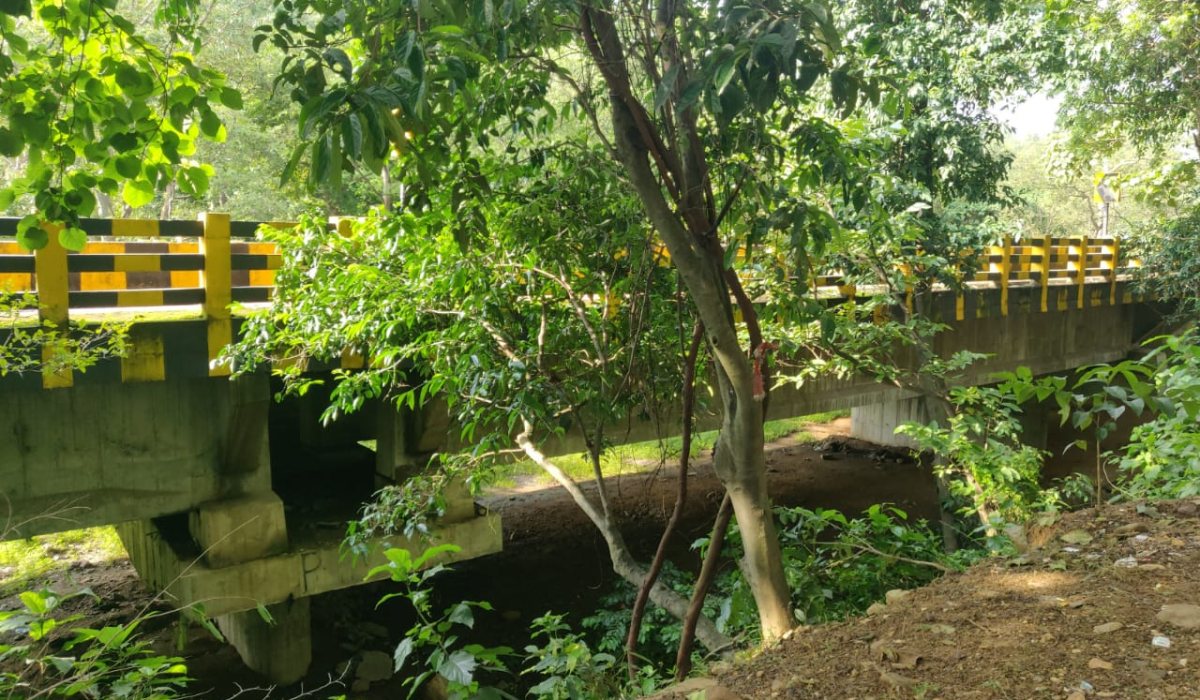
For the design engineer specifically, the inventory is the starting point for three recurring tasks:
- Deciding whether an existing culvert or bridge needs rehabilitation, widening or replacement.
- Prioritising a large number of structures for detailed inspection or load rating within a limited budget.
- Establishing baseline "as-existing" data before any Detailed Project Report is prepared for a road corridor.
2. Codal and institutional basis
| Reference | Title | What it governs for inventory purposes |
|---|---|---|
| IRC:SP:18-1996 | Manual for Highway Bridge Maintenance Inspection | Defines the inspection cycle and the proforma on which inventory and inspection data is first recorded at site |
| IRC:SP:35-1990 | Guidelines for Inspection and Maintenance of Bridges | Extends IRC:SP:18 with the condition-rating guidance used to populate the "current condition" fields |
| IRC:SP:37 | Guidelines for Evaluation of Load Carrying Capacity of Bridges | Uses inventory data (span, material, age, section properties) as direct input to load-rating calculations |
| IRC:SP:52-1999 | Bridge Inspector's Reference Manual | Field reference for the inspector recording condition data, complementing IRC:SP:18/35 |
| IRC:5-2015 | Road Bridges, Section I – General Features of Design | Classification of structures by span (culvert, minor, major, important bridge) that every inventory record must carry |
| MoRTH Circular RW/33037/1/87/NH(Std.), 23.09.1987 | Proforma for Detailed Bridge Inspection Reports | The original standard proforma still underlying many State PWD inventory formats |
| IBMS, MoRTH, 2016 onwards | National inventory and condition-rating platform | Current national standard for structure numbering, GPS-based location and digital condition rating |
| MoRTH letter dated 28.02.2017 | Format for Inventory Data of National Highways | Prescribes the Excel-based fields captured at division/PIU level and validated progressively up to Ministry level |
A word of caution from practice: clause numbers and even document titles shift across revisions — IRC:SP:35 has been revised more than once. Always confirm the edition held in your office library against the current IRC catalogue before quoting a clause number in a submission. A wrong clause reference is the fastest way to have a report sent back.
3. WHY: the purpose an inventory actually serves
An inventory exists to answer four questions that recur throughout a structure's life:
- What do we own, and where is it? — asset identification and geo-location.
- How important is it? — traffic served, alternative route availability, socio-economic role. IBMS formalises this as the Socio-Economic Bridge Rating Number, which weighs the structure's importance to daily economic activity in its vicinity against its physical condition. (Source: MoRTH/IBMS public briefing materials, 2016.)
- What condition is it in, right now? — a condition rating for each major component (deck, bearings, substructure, foundation, protection works), generally on a defined numerical scale.
- What decision does that condition justify? — routine maintenance, priority repair, load restriction or replacement, feeding directly into the rehabilitation programme and budget.
For the design engineer, the inventory therefore becomes the single source of truth consulted before a rehabilitation DPR, a load-rating study under IRC:SP:37, an adequacy check of an existing culvert's waterway, or a network-level prioritisation exercise for the maintaining authority.
4. WHEN: trigger points for creating or updating the inventory
| Trigger event | Action required | Typical responsibility |
|---|---|---|
| New structure constructed / commissioned | Fresh inventory record created and National Identity Number assigned before handover | Executing agency / project consultant, at completion certificate stage |
| Periodic cycle (routine) | Inventory data verified and updated alongside the IRC:SP:18 routine inspection cycle | State PWD / NHAI / concessionaire, generally pre- and post-monsoon |
| Post-flood or post-disaster event | Emergency condition update focused on scour, approach damage and afflux marks | Field engineer, followed by detailed inspection if distress is found |
| Prior to any rehabilitation or widening DPR | Full record retrieved and verified on site; discrepancies corrected | DPR consultant / design engineer |
| Change of ownership or road classification | Record transferred and re-validated by the new custodian agency | Receiving authority (MoRTH Regional Office / NHAI) |
| Structure demolished or replaced | Old identification number formally retired; new number issued for the replacement | Maintaining agency |
(Source: MoRTH letter No. 202.8 dated 28.02.2017, "Format for Inventory Data of National Highways," which prescribes the field → division/PIU → Regional Office → Ministry validation hierarchy; and the MoRTH D.O. letter of August 2016 on pre- and post-monsoon inspections per IRC:SP:18, IRC:SP:33 and IRC:SP:35.)
The rule of thumb used on most Indian highway projects: inventory data is "live," not a one-time exercise. It is checked at every inspection cycle and re-verified in full whenever a structure becomes the subject of a design or rehabilitation exercise.
5. WHAT: data fields that must be recorded
A complete inventory record is best organised into six groups. This grouping mirrors both the older MoRTH/IRC:SP:18 proforma and the newer IBMS data model.
5.1 Identification and administrative data
- Unique structure / National Identity Number (see Section 6 for the 20-character IBMS format)
- Name of the feature crossed (river, nullah, road, railway)
- Road name or number, chainage (km), State, district
- Owning and maintaining agency
- Year of original construction; year and nature of any subsequent repair, widening or strengthening
5.2 Location data
- Latitude and longitude (GPS), from which the Bridge Location Number is derived under IBMS
- Sketch or key plan showing the structure's position relative to the road alignment
5.3 Engineering and geometric characteristics
- Type of structure (culvert, slab or box culvert, minor bridge, major bridge, important bridge) per the span-based classification in IRC:5
- Number of spans, individual span lengths, total length
- Superstructure type and material (RCC slab, T-beam, box girder, steel, masonry arch)
- Substructure and foundation type (open, pile, well)
- Carriageway width, number of traffic lanes, footpath details
- Skew angle, if any
5.4 Hydraulic and hydrological data (structures over waterways)
- Catchment area, design discharge, HFL, linear waterway, vent sizes
- Afflux, freeboard, scour depth where computed or recorded
- Guide bund and training-work details, if provided
Carry these across from the hydrology report rather than re-deriving them at the next review. The same parameters that govern hydrology and hydraulics studies for bridges and CD structures belong in the inventory record, and the free hydrology calculator and hydro-scour calculator are useful for a quick sanity check against what the record says.
5.5 Condition and structural rating data
- Component-wise condition rating — deck, bearings, expansion joints, substructure, foundation, protection works, approach — commonly on a 0–9 scale under IBMS, recorded at each inspection
- Overall Structural Rating Number for the bridge as a whole
- Photographic record of distress, dated and geo-tagged where possible
- Recommendations from the previous inspection and their status (attended to / pending)
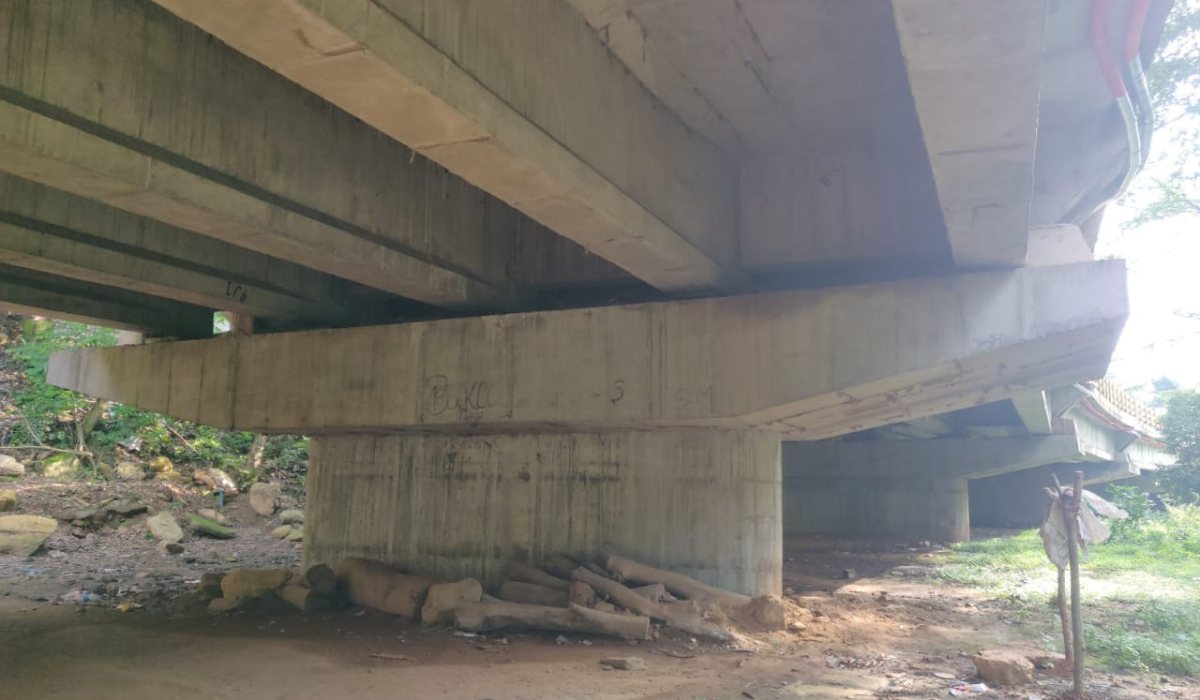
That last row — "position of recommendations of previous inspection," Item 23 of the 1987 MoRTH proforma — is the one most often left blank in practice, and the one that matters most when a structure is later found to have failed. If a defect was flagged three cycles ago and never closed out, the inventory should say so.
5.6 Traffic and socio-economic data
- Average Daily Traffic (ADT) on the structure and vehicle-class mix
- Availability and length of an alternative route in case of closure
- Socio-economic significance of the crossing, feeding the Socio-Economic Bridge Rating Number
Get a technical opinion on your project
Design, DPR, proof checking and independent review for highway and bridge projects across India.
6. Standard format and numbering pattern
6.1 Structure identification number
Every structure inventoried under IBMS is given a unique 20-character alphanumeric National Identity Number, encoding among other things the State, the RTO zone, and the class of road (National Highway, State Highway or district road) on which the structure sits. (Source: MoRTH/Lok Sabha reply dated 27.07.2017.) This is supplemented by:
- A Bridge Location Number, derived from the GPS coordinates captured at the time of inventory.
- A Bridge Classification Number, derived from the engineering characteristics — design, materials, type, age, loading, number of lanes, length, carriageway width.
- A Structural Rating Number, from the component-wise 0–9 condition ratings.
- A Socio-Economic Bridge Rating Number, from the traffic and economic significance data.
When a structure is demolished or replaced, its number is formally retired and a fresh number issued to the replacement. The old number is never reused. This convention prevents ambiguity in the historical maintenance record — without it, a repair carried out in 2009 and a repair carried out in 2024 on two entirely different structures end up in the same file.
6.2 Typical inventory register — column layout
Most State PWD and NHAI inventory registers, following the pattern set by the 1987 MoRTH proforma and later digitised under IBMS, use one row per structure with columns grouped as follows:
| Column group | Typical column headings |
|---|---|
| Identification | Sl. No. | Structure/National ID No. | Name of Structure | River/Feature Crossed |
| Location | Road No. | Chainage (km) | State | District | Latitude | Longitude |
| Classification | Type (Culvert/Minor/Major/Important) | No. of Spans | Span Arrangement | Total Length (m) |
| Engineering data | Superstructure Type | Substructure/Foundation Type | Carriageway Width (m) | Skew Angle |
| Hydraulic data | Catchment Area (km²) | Design Discharge (m³/s) | HFL (m) | Linear Waterway (m) |
| Condition | Year Built | Last Inspection Date | Component Ratings (0–9) | Overall Structural Rating | Remarks |
| Administrative | Maintaining Agency | ADT | Priority / Socio-Economic Rating |
Treat every column above as a minimum data set. Project-specific columns — last major repair date, scour history, guide bund provided Y/N — are commonly added without disturbing the standard layout, and are worth adding wherever the corridor has a known problem.
7. HOW: step-by-step procedure for preparing the inventory
- Desk study. Collect toposheets, past DPRs, road-network GIS layers and any existing — even partial — inventory records held by the maintaining agency.
- Field verification and data capture. Visit each structure; record identification, GPS location, geometric and hydraulic data as per Section 5; photograph all elevations and any visible distress.
- Condition rating. Assign component-wise ratings following IRC:SP:35 (or the agency's adopted 0–9 IBMS scale), and note the specific distress against each component rather than only the score.
- Numbering and registration. Assign the National Identity Number for new structures, or verify the existing number for already-inventoried ones, before the record enters the register.
- Digitisation and validation. Enter verified data into the prescribed digital format — the Excel template at division/PIU level, consolidated and validated at Regional Office and Ministry level per the 2017 MoRTH circular — or directly into IBMS or the State BMS software where adopted.
- Quality check and sign-off. Cross-check a sample of records against site photographs and drawings before the data is accepted as the agency's baseline.
- Periodic update. Re-verify at every scheduled inspection, and immediately after any flood, accident or repair event that changes the structure's condition.

The step that decides whether the whole exercise is worth anything is Step 6. A register assembled from unverified field sheets looks complete and behaves as though it is authoritative, which is worse than an obviously incomplete one. Sampling ten per cent of records against photographs before sign-off is cheap; discovering at the rehabilitation stage that half the span arrangements are wrong is not. This is also why an independent review of the compiled inventory is worth building into the programme on large networks.
8. What this means for the bridge design engineer
- Before starting any rehabilitation or widening design, pull the existing inventory record first. It saves re-surveying data — span arrangement, foundation type, hydraulic parameters — that already exists, and immediately flags any structure with a poor condition rating or a history of recurring distress.
- When proposing a new culvert or small bridge, the record created at project completion becomes that structure's first inventory entry. Get the identification, location, geometric and hydraulic fields right at handover; correcting them later requires a fresh field verification.
- When prioritising structures for limited rehabilitation funds, the Structural Rating Number and the Socio-Economic Bridge Rating Number together drive the priority list under IBMS-style management. An engineer's technical condition assessment is only half of that equation — a bridge in fair condition with no alternative route for 40 km can legitimately outrank a worse-rated bridge with a diversion alongside it.
- Treat the inventory as a living record. A structure's design life is 50–100 years. The record should be readable, understandable and extendable by an engineer who was not involved in its creation, decades later.
If you are compiling or reviewing an inventory for a corridor and want a second pair of eyes on the format, the rating methodology or the rehabilitation prioritisation that follows from it, this work is handled end to end by our team — see the river bridges and ROB and RUB practice areas, or the wider detailed engineering services.
9. Frequently asked questions
What is a bridge inventory?
A bridge inventory is a structured register of every bridge, culvert and flyover on a road network, recording each structure's identity, location, geometry, materials, hydraulic parameters, current condition rating and socio-economic importance. In India, the national reference format is the Indian Bridge Management System (IBMS), operated by MoRTH since 2016.
What is the IBMS bridge identification number format?
Under IBMS, every inventoried structure receives a unique 20-character alphanumeric National Identity Number encoding the State, the RTO zone and the class of road on which the structure stands. It is supplemented by a Bridge Location Number derived from GPS coordinates, a Bridge Classification Number derived from engineering characteristics, a Structural Rating Number from component condition ratings, and a Socio-Economic Bridge Rating Number.
Which IRC codes govern bridge inventory and inspection in India?
IRC:SP:18-1996 (Manual for Highway Bridge Maintenance Inspection) defines the inspection cycle and field proforma; IRC:SP:35-1990 provides condition-rating guidance; IRC:SP:52-1999 is the Bridge Inspector's Reference Manual; IRC:5-2015 provides the span-based classification; and IRC:SP:37 uses inventory data as input to load rating. The MoRTH proforma circular of 23.09.1987 and the inventory-format letter of 28.02.2017 govern the administrative format.
How often must a bridge inventory be updated?
Inventory data is verified at every routine inspection cycle — generally pre- and post-monsoon under standing MoRTH instructions read with IRC:SP:18 — and updated immediately after any flood, accident, repair or widening event. It is also re-verified in full before any rehabilitation or widening DPR is prepared, and whenever ownership or road classification changes.
What is the difference between a bridge inventory and a bridge inspection report?
The inventory is the permanent asset record — identity, location, geometry, materials, hydraulic parameters — that changes only when the structure itself changes. The inspection report is the periodic snapshot of condition recorded against that asset record at each cycle. In IBMS terms, the inventory carries the Location and Classification Numbers; the inspection updates the Structural Rating Number.
Are culverts included in a bridge inventory?
Yes. Culverts form the overwhelming majority of structures on any network — of the 1,62,022 structures inventoried on National Highways by July 2017, 1,26,233 were culverts. They are classified by span under IRC:5 and carry the same identification, location, hydraulic and condition fields as larger structures.
What condition rating scale is used in IBMS?
IBMS uses a 0–9 rating applied component by component — deck, bearings, expansion joints, substructure, foundation, protection works and approaches — with the component scores rolled up into an overall Structural Rating Number for the structure. The methodology follows IRC:SP:35 condition-rating guidance.
10. Consolidated reference list
- IRC:SP:18-1996, Manual for Highway Bridge Maintenance Inspection, Indian Roads Congress.
- IRC:SP:35-1990, Guidelines for Inspection and Maintenance of Bridges, Indian Roads Congress.
- IRC:SP:37, Guidelines for Evaluation of Load Carrying Capacity of Bridges, Indian Roads Congress.
- IRC:SP:52-1999, Bridge Inspector's Reference Manual, Indian Roads Congress.
- IRC:5-2015, Standard Specifications and Code of Practice for Road Bridges, Section I – General Features of Design, Indian Roads Congress.
- IRC:SP:13 and IRC:89, referenced for the hydraulic data fields carried into the inventory.
- MoRTH letter No. RW/33037/1/87/NH(Std.) dated 23.09.1987, Proforma for Detailed Bridge Inspection Reports.
- MoRTH letter No. 202.8 dated 28.02.2017, Format for Inventory Data of National Highways.
- Ministry of Road Transport & Highways, Indian Bridge Management System (IBMS) — public launch materials, October 2016.
- Lok Sabha Starred Question No. 162, answered 27.07.2017, Indian Bridge Management System, MoRTH.
Disclaimer: This article paraphrases the scope and intent of the cited codes, manuals and government communications for engineering-practice reference. It is not a substitute for the current, complete text of IRC:SP:18, IRC:SP:35, IRC:SP:37, IRC:SP:52, IRC:5 or the MoRTH/IBMS circulars, which should be consulted directly before finalising any official inventory format.